Why We Do Medical Missions: Where Physical Healing Meets Eternal Hope
For over 15 years, Jesus Harvesters Ministries has been traveling to remote corners of East Africa with suitcases full of medicine and hearts full of the Gospel. We've learned something profound in those years: when you care for someone's body, you earn the right to speak to their soul. Every antibiotic we dispense, every wound we bandage, every malaria test we run becomes a bridge—connecting people who are physically suffering to the God who loves them and offers eternal healing.
This is the story of how medical missions work, told through the lives of people like Edna, Deng, and hundreds of others whose bodies were healed and whose souls were saved.
The Pattern: Clinic, Prayer Tent, Crusade, Church
Before we arrive in any community—whether it's the Cherangani Hills of Kenya, the remote villages of Tanzania, or the dusty outskirts of South Sudan—our Kenyan partners from Agape Fellowship Centre construct a new church building. This structure serves a dual purpose: during the week of our medical mission, it becomes our clinic. After we leave, it becomes the permanent home of a newly planted church with a newly installed pastor.
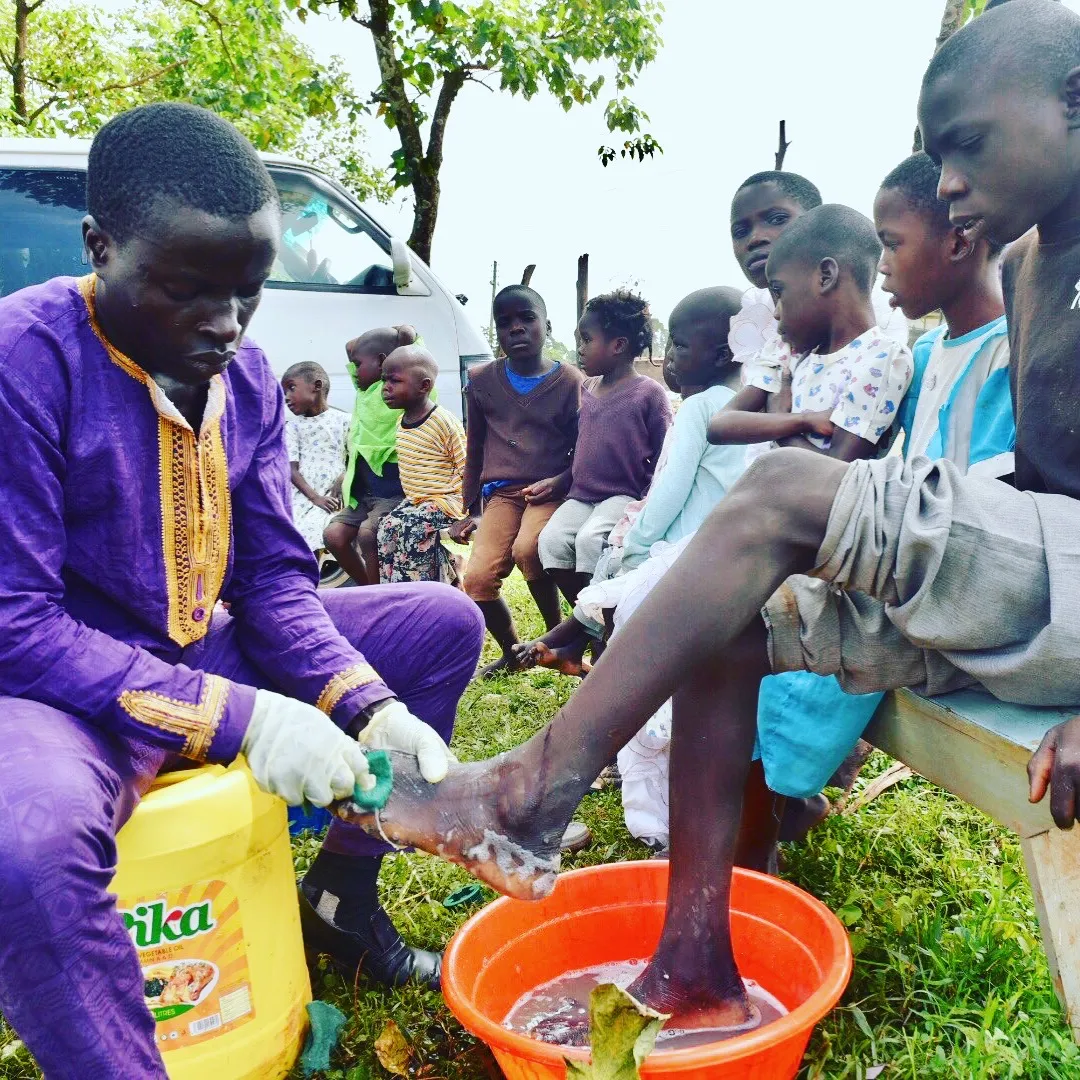
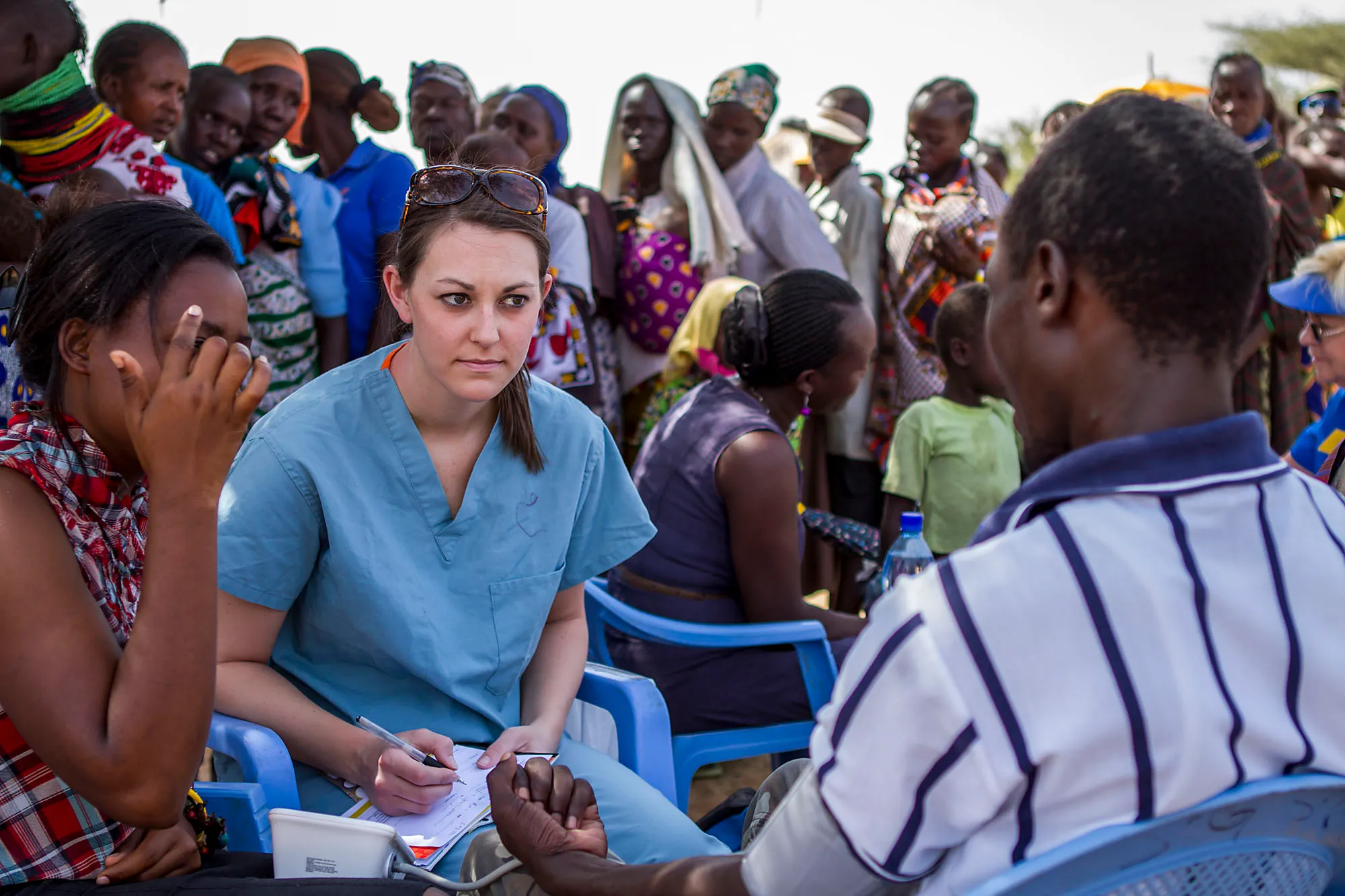
Each morning at 8:30, the clinic opens. Patients have often been waiting since before dawn. Some have walked for hours. Mothers carry babies on their backs. Elderly men lean on walking sticks. Children press forward with bright, uncertain eyes. Over the course of five days, we typically see between 1,000 and 2,000 patients.
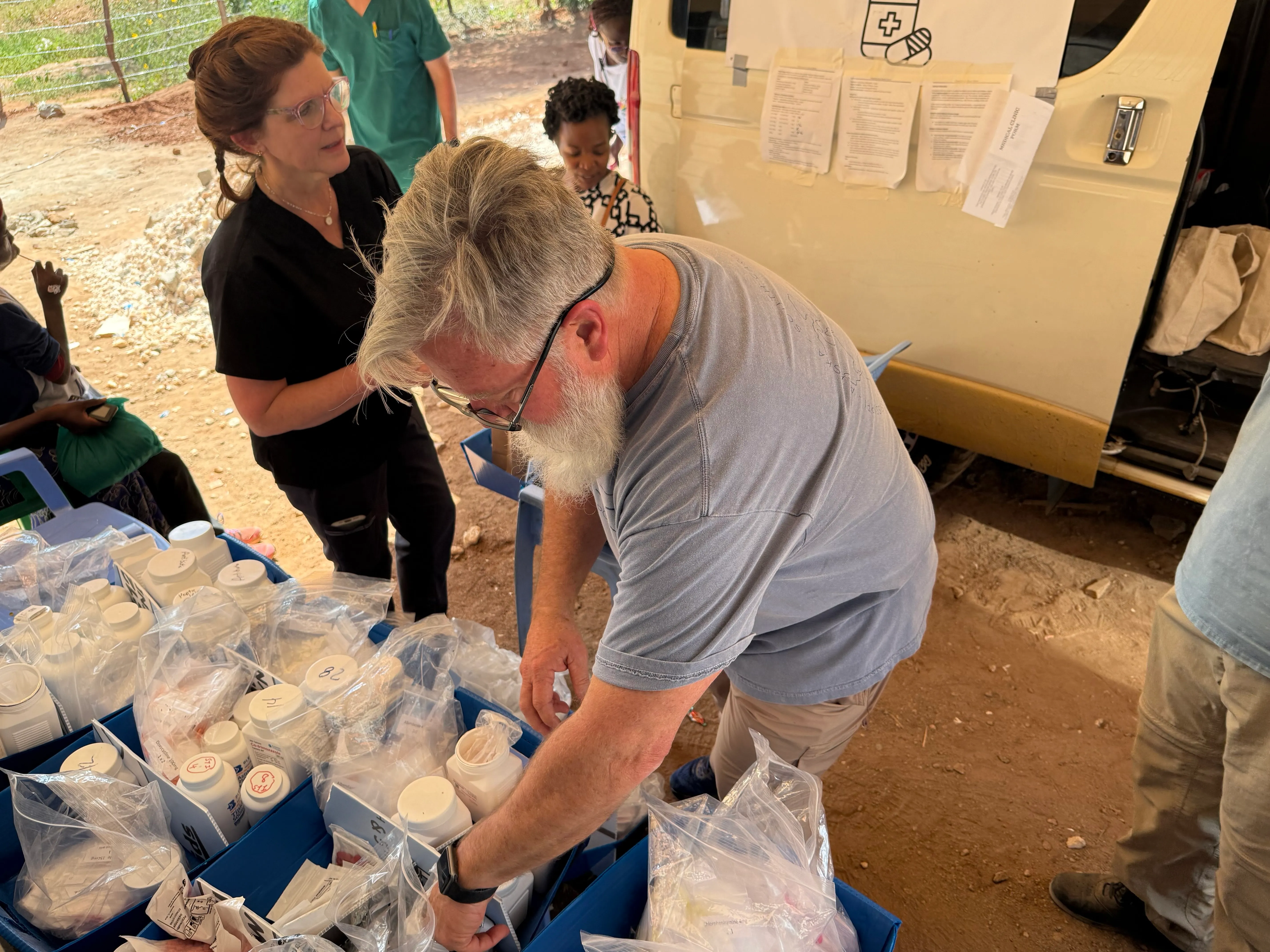
We bring an entire pharmacy—141,000 pills carefully packed into suitcases: vitamins for malnourished children, deworming medications, Tylenol, ibuprofen, antibiotics for infections, medications for high blood pressure. We set up wound care stations with glucometers and malaria testing equipment. Our veterinary team travels through surrounding communities treating goats, sheep, and cattle—because when a family's livestock is healthy, the family can eat.
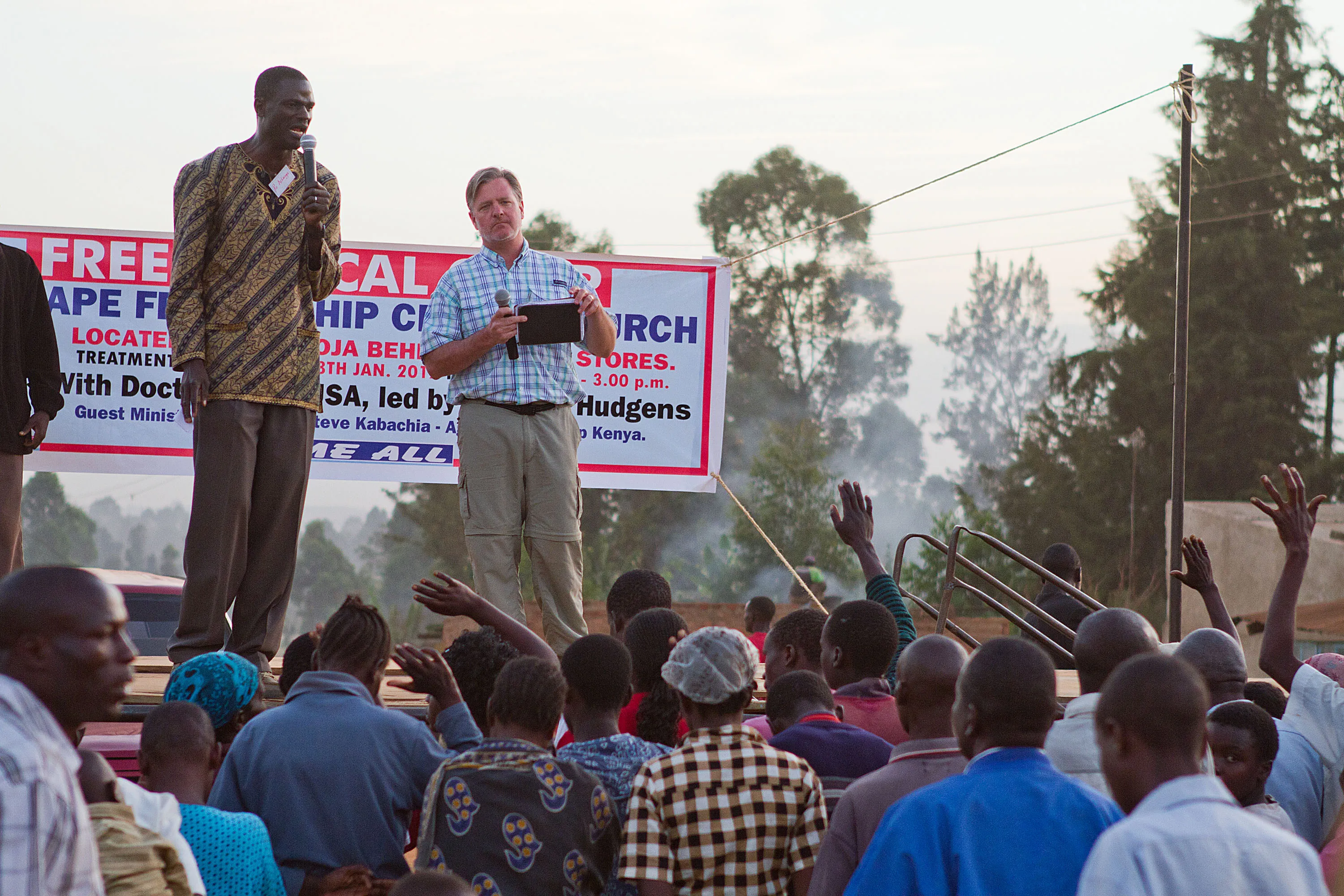
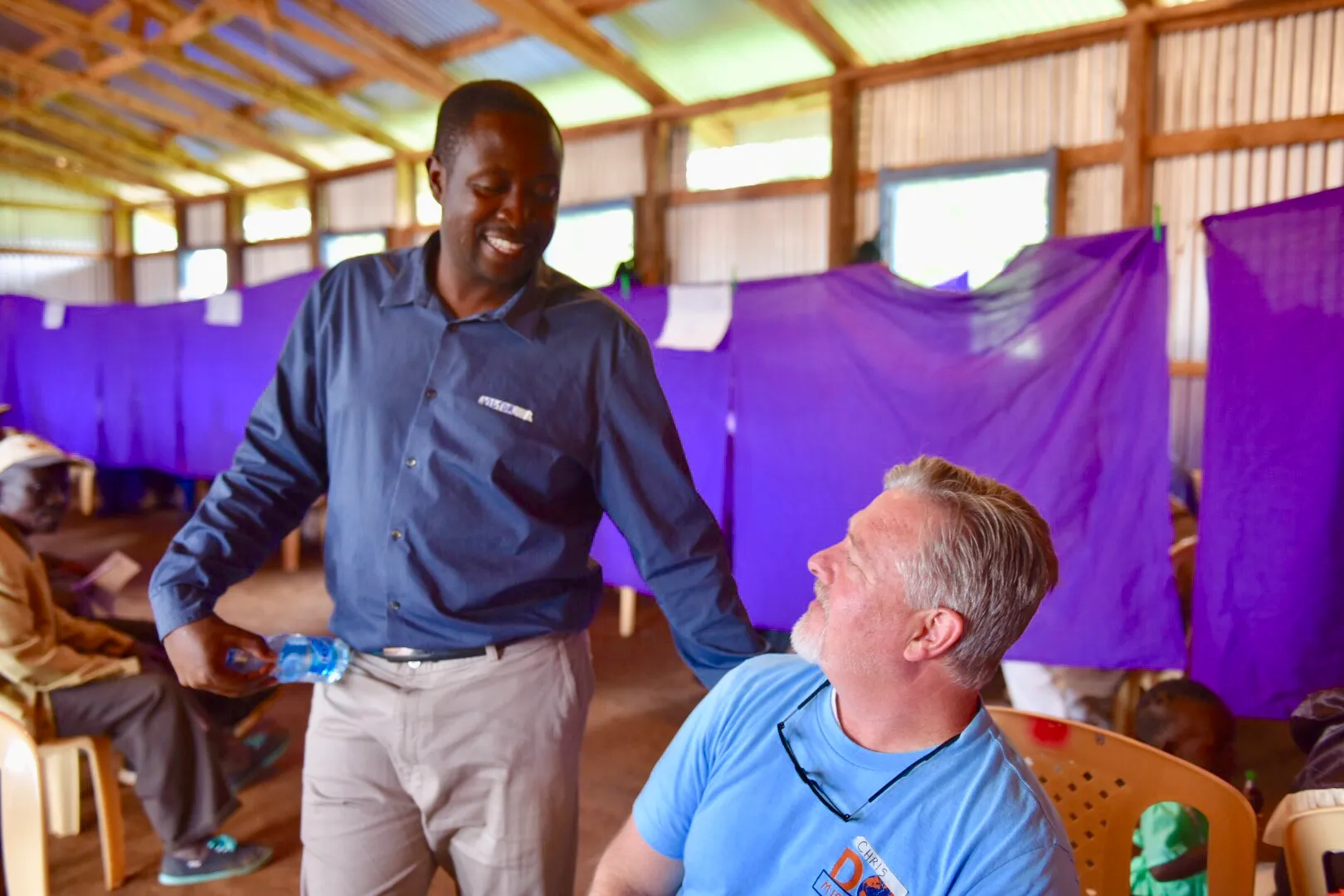
But here's what makes our medical missions different: while American doctors and nurses treat physical ailments, Kenyan pastors treat spiritual ones. Every single patient is offered an opportunity to visit the prayer tent. And every evening, when the clinic closes, we pack up the medical supplies and head to the city center for open-air crusades where worship music fills the streets and the Gospel is preached to crowds who gather.
This is how physical healing leads to spiritual transformation.
Edna's 30-Kilometer Walk to Hope
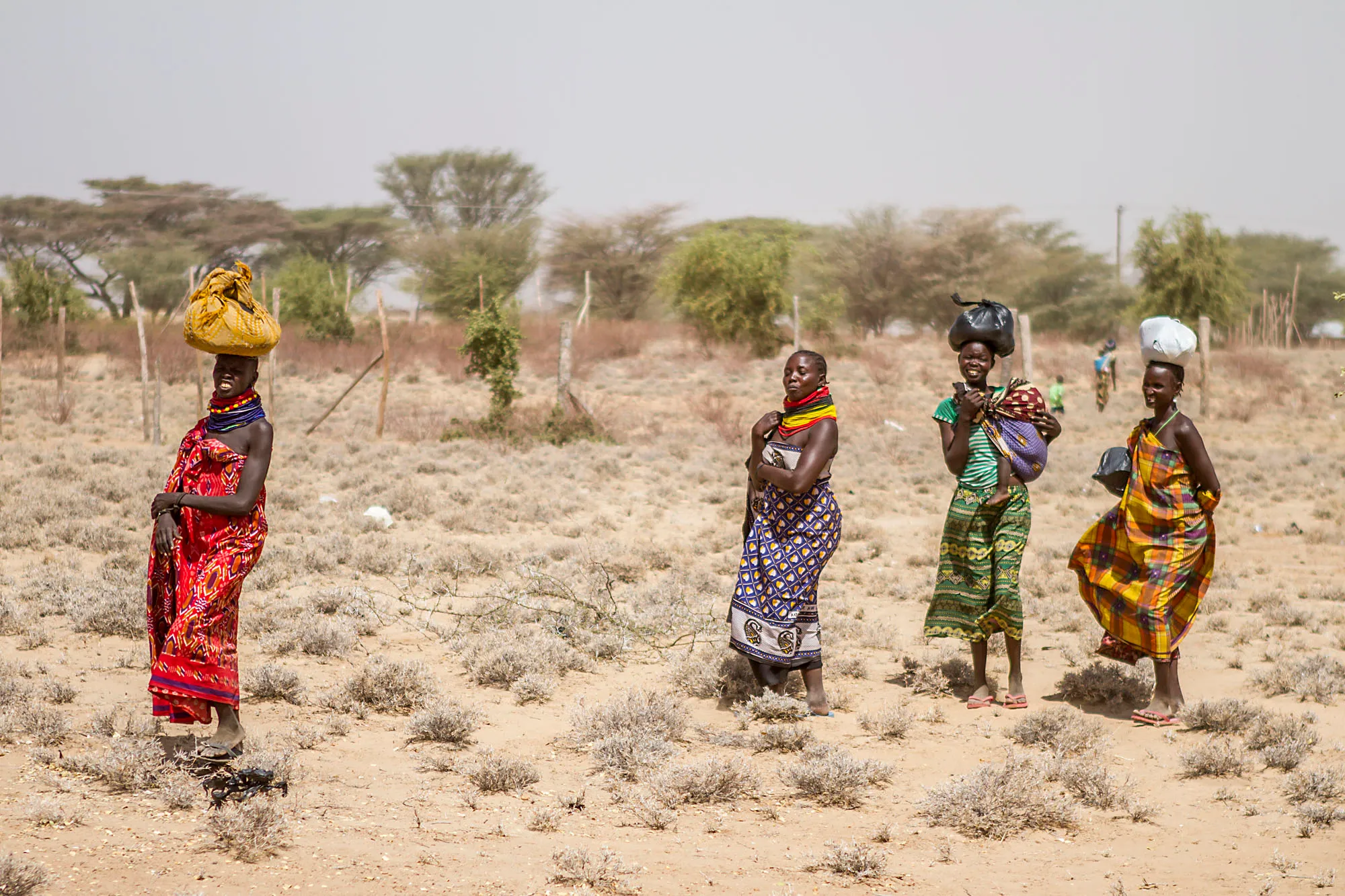
It was day three of our 2019 Kapcherop medical mission when we met Edna. Dr. Jeremy Rogers and Bishop Achanga were driving back to the clinic along the hilly, dusty roads when they saw people walking toward the site—patients hoping to be seen. Bishop pulled alongside a young woman and started talking to her in Swahili, explaining that it would be better to come back tomorrow because there was already a very long line.
She asked for a ride anyway because she wanted to see exactly where the clinic was located. As she got into the car, they discovered something remarkable: Edna had walked 30 kilometers—nearly 19 miles—to reach the clinic. She had left at 7:00 that morning without even knowing where the clinic was located. As she walked, she would ask people along the way to point her toward this free medical clinic she'd heard about.
Bishop and Dr. Rogers looked at each other. They felt the same thing: God had orchestrated this divine appointment.
When they arrived at the clinic, Dr. Rogers immediately brought Edna to an examination station. "We were able to care for her by giving her water, snacks, and free medication," he recalls. But the most important moment came next: "We had the opportunity to pray with her."

Inside that prayer tent, someone explained to Edna that the same God who had guided her steps on those 30 kilometers of dusty roads—the God who had prompted Bishop Achanga to pull up beside her at just the right moment—this God loved her deeply and wanted to heal not just her body, but her soul.
Edna told them she would be coming back the next day to bring her family, and then would return again on Saturday to bring her children when they were out of school. 30 kilometers. On foot. Up and down hill after hill. Because she had found something worth walking for.
That evening, Edna would have joined hundreds of others at the open-air crusade in the city center. Worship music. Preaching. The Gospel proclaimed clearly. By the end of that week in Kapcherop, over 600 people had professed faith in Christ.
Later, as Dr. Rogers looked at the 60 patients still waiting in line, he wondered: How many of them were like Edna? How many had traveled impossible distances because they'd heard there was hope at this clinic?
The Prayer Tent: Where Bodies and Souls Find Healing
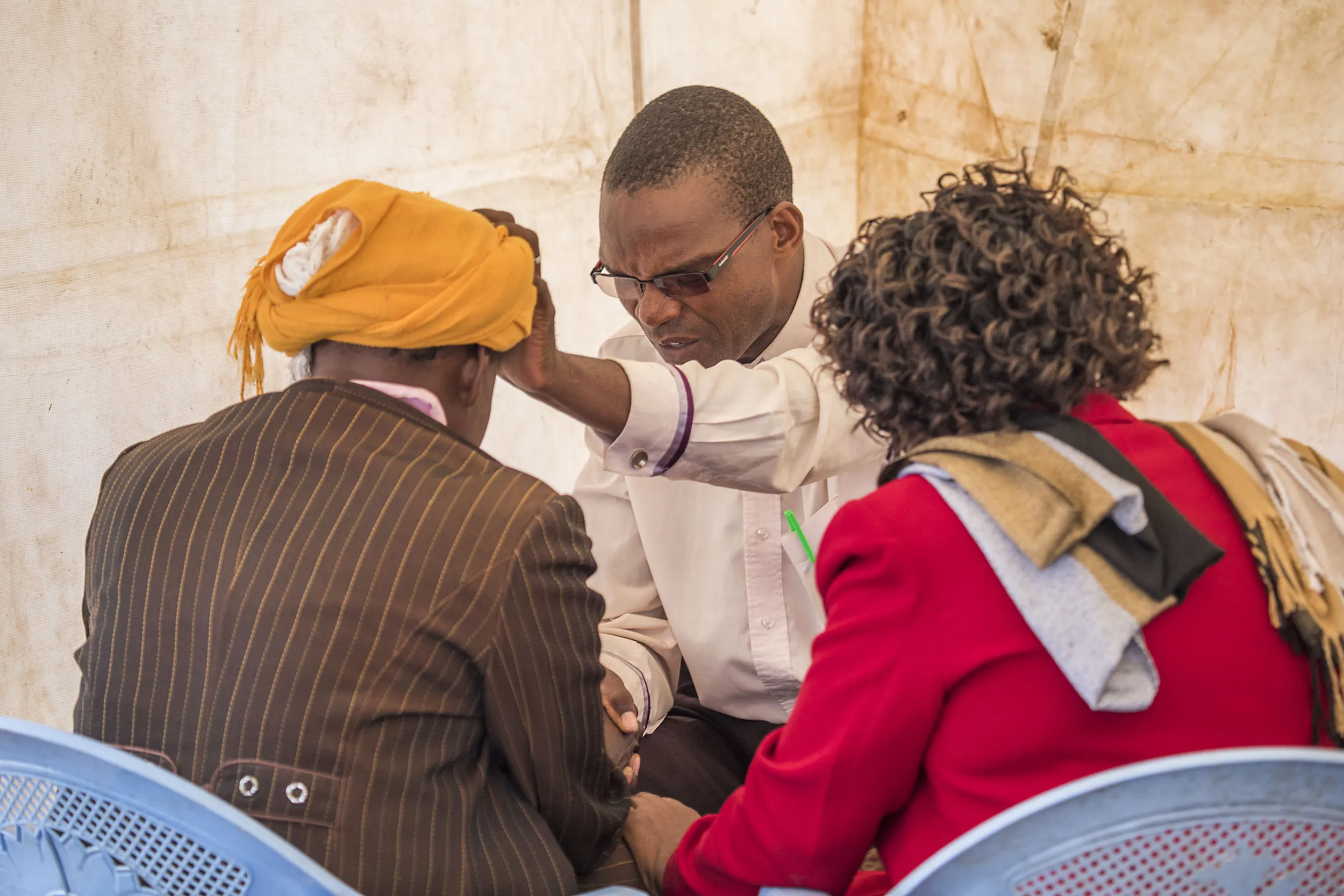
The prayer tent is where the miracle of medical missions truly happens. While doctors diagnose ear infections and treat malaria in one part of the clinic, pastors are addressing deeper wounds in another. Every patient who comes through receives both physical care and a spiritual invitation.
In Shinyalu, Kenya, in June 2018, about 700 people came to our medical clinic. The local government was so impressed with our work that they sent their own health workers to help, allowing us to see more patients. But while we were treating physical ailments, something more profound was happening in the prayer tent.
Inside that tent, Kenyan pastors shared the Gospel with people who had never heard it. They prayed with mothers worried about their children. They counseled with men carrying burdens of shame. They explained that Jesus came to heal not just bodies, but souls. By the end of that week, about 700 people had professed faith in Christ.

In Chebai, western Kenya, in January 2020, we saw more than 1,500 patients. Dr. Carl Grimmett and our veterinary team treated hundreds of animals. We dispensed 141,000 pills. We set up wound care stations. We tested for malaria. And in the prayer tent, patient after patient heard about God's love. Over 680 people professed their faith in Christ that week.
In January 2025, we treated 1,966 patients over five days. The numbers climbed daily: 186 treated on day one, 274 on day two, 411 on day three, 579 on day four, and 516 on day five. But the spiritual harvest climbed too: 53 saved, then 65, then 101, then 123, then 68. By the end of the week, 410 people had given their lives to Christ.
These aren't just numbers—they're mothers like Edna who walked 30 kilometers because they heard there was hope. They're fathers who learned that forgiveness is possible. They're children who heard for the first time that God loves them.
Deng: When Medicine Becomes Miracle
Sometimes, the healing we provide through medical missions extends far beyond a week-long clinic. Sometimes, God uses a simple examination to change the entire trajectory of a life.
In May 2023, Dr. Kyle Hudgens was serving at a medical clinic near the border of Darfur in South Sudan. Over 1,100 patients waited in the scorching heat, many having walked miles to get there. Among them was a twelve-year-old boy named Deng, small for his age—as is common for children living outside the safety of orphanage compounds.

From across the examination table, Deng looked healthy enough. But when Dr. Hudgens walked around to listen to his heart, there was no mistaking it—the loud murmur of mitral stenosis, a sign of rheumatic heart disease caused by an untreated strep infection. Without treatment, this was a terminal condition.
Dr. Hudgens called over Eugenio Kirima, our partner's Chief Program Officer. Both men had tears in their eyes as they explained the diagnosis to Deng's parents. Deng needed heart valve replacement surgery or he wouldn't survive—a procedure impossible to access in his remote village. "We told them we would do what we could."
During that same week, while Deng was being diagnosed, other patients were visiting the prayer tent. Pastors were sharing the Gospel with those who came for medical care. Evening crusades were drawing crowds. 220 people came to faith in Christ that week in South Sudan.
But Deng's story was just beginning. Back in the United States, God moved in the hearts of a couple who generously gave to make Deng's operation possible. After months of coordination, Deng received two valve replacements at a missionary hospital in Kenya. By the time he arrived for surgery, he was so weak he could barely eat.
In 2024, Dr. Hudgens returned to South Sudan. While in Nairobi, he visited the Kenya Rehabilitation Home where he was introduced to a stout young man who could run and play with other children. "I could not believe my eyes," Dr. Hudgens remembers. "This was truly a miracle from God."
Think about the chain of events: A boy from a remote South Sudan village shows up at a medical clinic. He's examined by a U.S.-trained doctor. Funding is provided for life-saving surgery. And now he runs, plays, and thrives—back home and enrolled in school.
This is what happens when physical healing and spiritual care work together.
Kapcherop: Where Enemies Became Brothers
On January 12, 2019, more than twenty missionaries left the USA for Kapcherop, Kenya, a remote community in the Cherangani Hills where the Marakwet people live. Our Kenyan partners had just finished constructing the church building that would serve as our clinic.
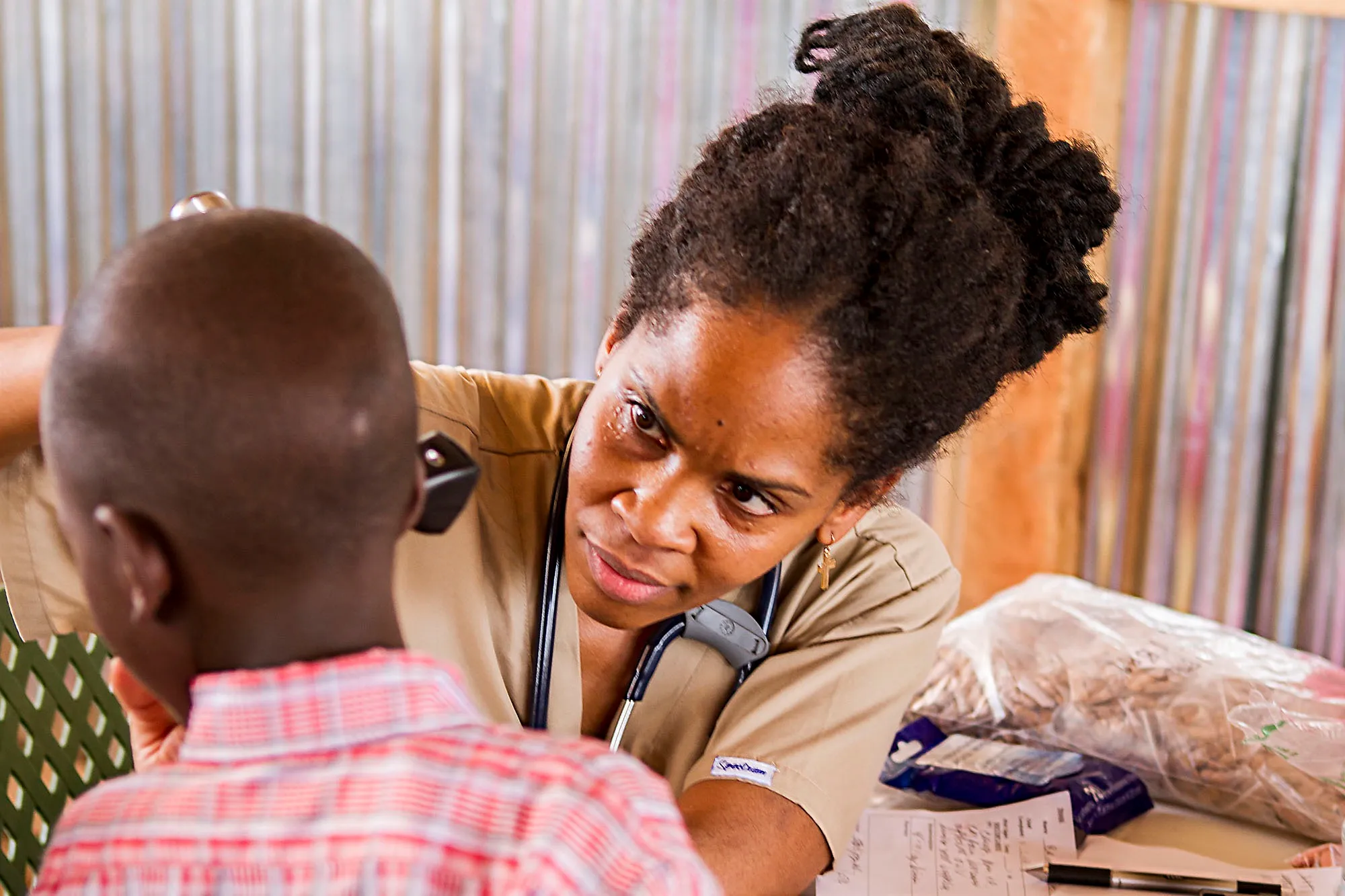
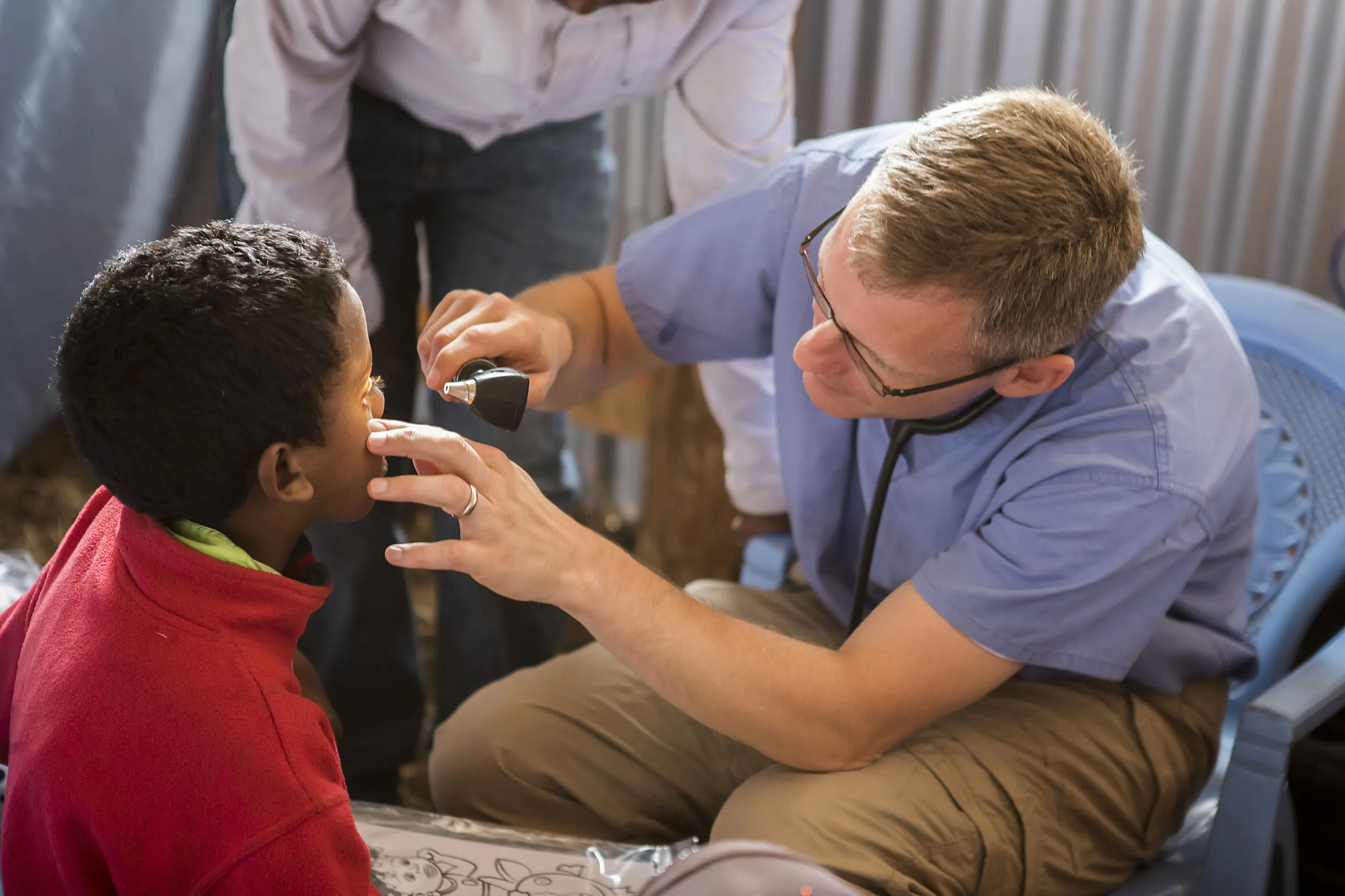
For five days, we worked from 8:30 a.m. until 4:00 p.m. Over 1,500 patients were examined—people like Edna who had walked impossible distances because they'd heard there was hope at this free medical clinic. Doctors treated ear infections in screaming toddlers. They examined patients with diseases most Americans have never seen: rheumatic heart disease, thyroid disease, HIV/AIDS, malaria, typhoid, tropical infections. Every patient received free medication. And every patient was invited to the prayer tent.
Inside that tent, pastors explained that the God who created them loves them deeply. They shared that Jesus came to save them. Patient after patient prayed to receive Christ.
Every evening, we packed up the medical supplies and headed to the city center for open-air crusades. Worship music filled the streets. The Gospel was preached. Crowds gathered. Over 600 people professed their faith in Christ throughout the week.
But Sunday morning brought something extraordinary. The building that had served as our medical clinic all week—where bodies had been healed and souls had been saved—became the permanent home of the new Agape Church in Kapcherop. A pastor was installed to shepherd this new flock.
And then, in front of everyone gathered, something happened that demonstrated the transforming power of the Gospel: two neighboring communities that had been at war with each other for decades stood together and reconciled. They vowed to live in peace. Ancient tribal hostilities dissolved in the presence of God's love.
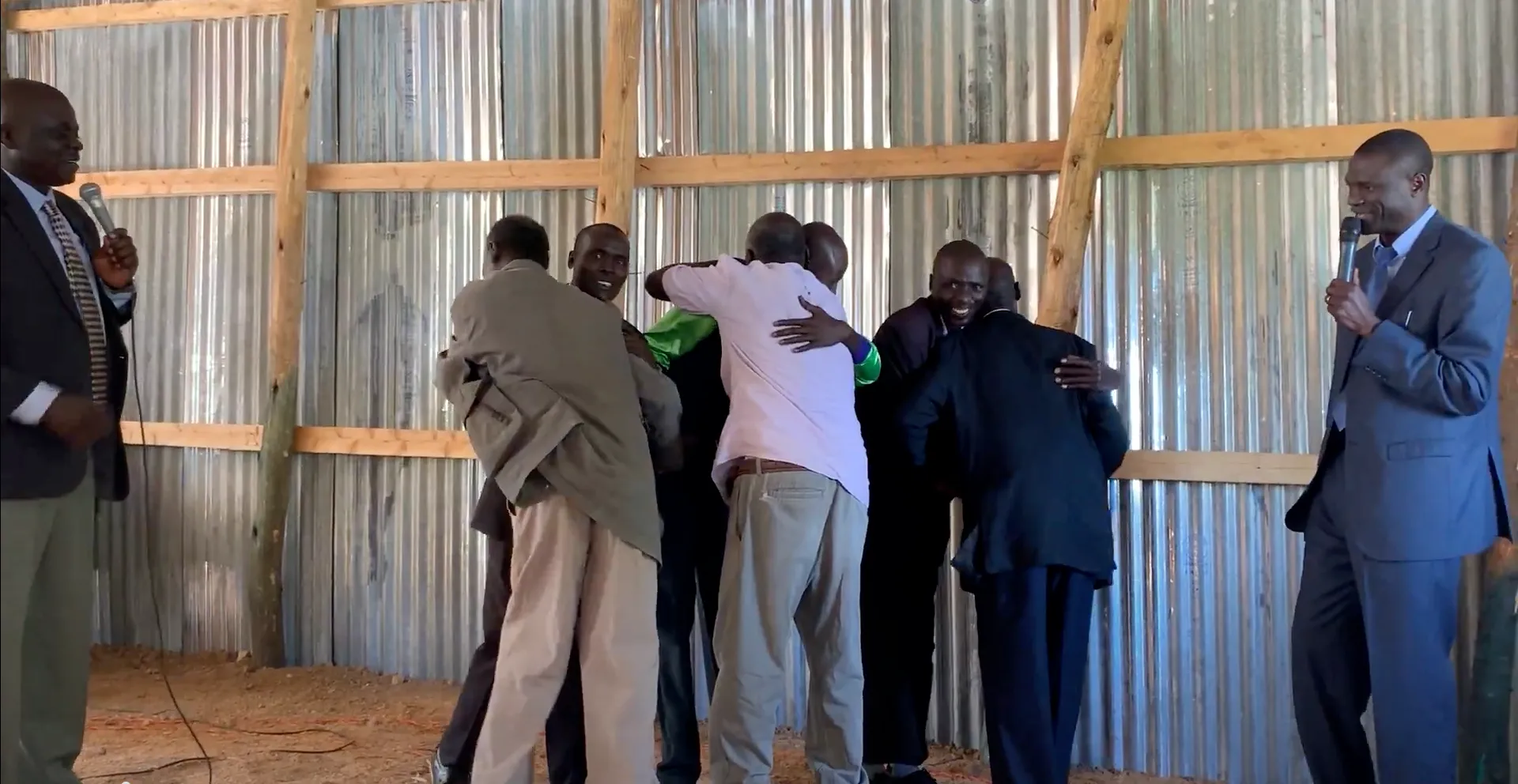
This is what happens when you combine medicine, prayer, crusades, and church planting. Physical healing leads to spiritual healing. Spiritual healing leads to reconciliation. And reconciliation transforms entire communities.
The Ripple Effect: From Patient to Pastor
During one of our South Sudan medical outreaches, a woman came for treatment from a distant village. During her counseling session in the prayer tent, she shared something that broke our hearts: "I'm in charge of a church, but I've had no training at all. I just use the sermon notes from the pastor of the church I used to attend."
As we treated over 1,000 patients and saw 220 people come to Christ that week, we kept encountering this same reality: people were hungry for the Gospel, but many of the pastors leading them had little training themselves. Some had never owned a Bible.
That medical mission—where we came to heal bodies—led directly to our South Sudan pastor training initiative. To date, 40 pastors have been equipped through our partnership with Lift Up the Vulnerable. One pastor shared this testimony: "Due to challenges in life, I had lost the fire for ministry. But after going through the first training session, I was revived and started a church in my home area. It's been about 5 months now and the church has grown to about 30 members."
Do you see the beautiful multiplication? A medical mission leads to Gospel conversations in the prayer tent. Those conversations lead to salvations. Those salvations lead to church plants. Those church plants need trained pastors. Those trained pastors plant more churches. The ripple effect continues.
Why We Keep Going Back
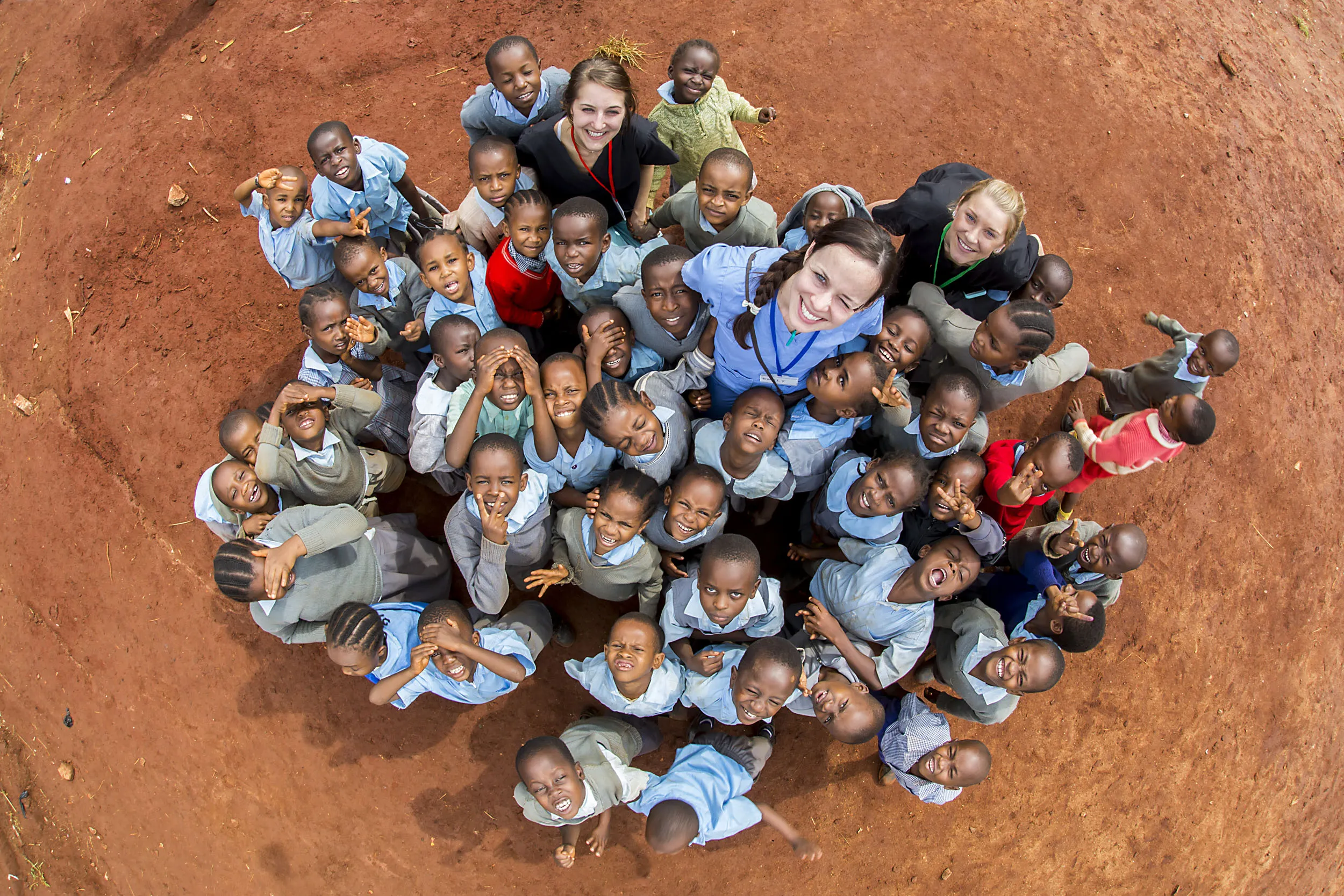
For over 15 years, we've been packing suitcases full of antibiotics and wound care supplies. We've been setting up clinics in buildings that will become churches. We've been treating malaria and ear infections and tropical diseases. We've been caring for livestock so families can eat.
But more importantly, we've been inviting every patient—every single one—to visit the prayer tent where they can hear about the Great Physician who heals souls. We've been hosting evening crusades where the Gospel is proclaimed to crowds. We've been planting churches and installing pastors who will continue the work long after we leave.
We do medical missions because Jesus commanded us to love God and love our neighbor. When Edna walks 30 kilometers on foot because she's heard there's hope at a free medical clinic, we have the privilege of showing her that God orchestrated her steps. When we give her free medication and water and snacks, when we pray with her and tell her about Jesus, when we give her a ride home to shorten her journey—she experiences the tangible love of Christ.
When Deng receives heart valve replacement surgery and runs and plays like a normal boy, he witnesses God's miracle-working power. When ancient tribal enemies reconcile in a church that started as a medical clinic, the world sees Christ's transforming power.
This is why we do medical missions. Because every pill we give away, every wound we bandage, every malaria test we run, every prayer we pray in that prayer tent, every song we sing at the evening crusade, every church we plant is an opportunity to say: "God sees you. God loves you. And God sent us here to show you His heart—to heal your body and to save your soul."
Will you join us in this work? Your partnership makes these life-changing missions possible.