

A Tribute to Bishop Dr. Stephen Munyiri Kabachia
Founder of Jesus Harvesters Ministries and Pioneer of Indigenous African Mission
A Life Surrendered to the Great Commission
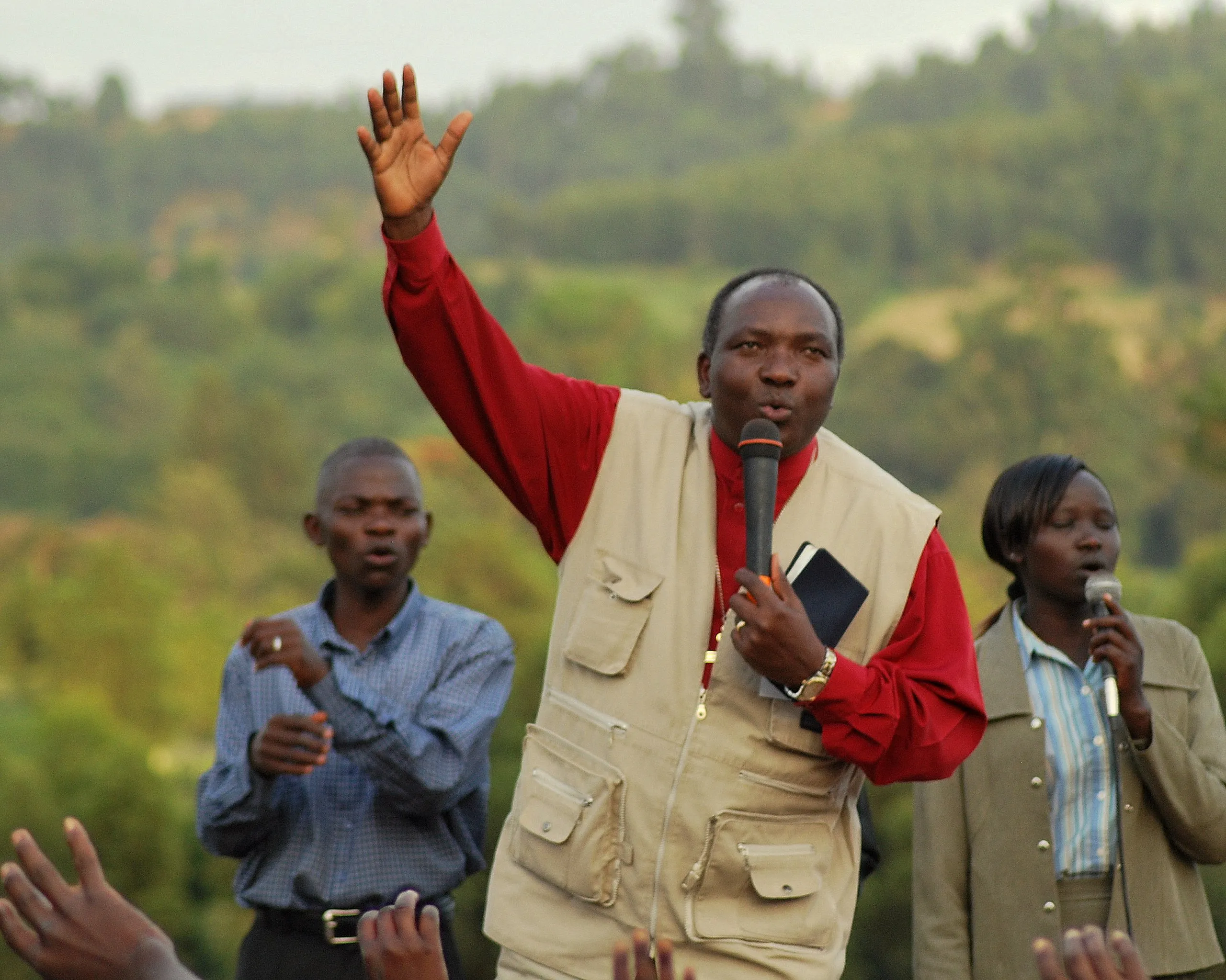
Bishop Dr. Stephen Munyiri Kabachia was a man who heard the voice of God and responded with unwavering obedience. His journey from a high school student in central Kenya to becoming one of Africa's most influential mission leaders stands as a testament to what God can accomplish through a surrendered life. On December 26, 2013, Steve went home to be with the Lord he served so faithfully, leaving behind a legacy that continues to transform East Africa and inspire the global church.
Early Years and Divine Calling
Stephen Kabachia's story began in the central highlands of Kenya, where as a young high school student, he encountered the living Christ. The salvation experience that marked his life was not merely personal transformation but the beginning of a divine assignment that would span continents and impact generations. Immediately upon his conversion, a powerful call settled upon his life—a call so urgent and compelling that he could not remain idle.
After completing high school, Steve pursued teacher training at a college in Kenya's coastal region, preparing for what seemed like a conventional career in education. Yet God had other plans. As a newly trained teacher, he was assigned to work in Garissa, a predominantly Somali-populated town in Northern Kenya. It was in this remote, challenging mission field that the vision that would define his ministry was birthed.
While serving as a teacher among the unreached peoples of North Kenya, God gave Stephen Kabachia a vision that would become the cornerstone of his life's work. In this divine encounter, he saw Jesus handing him a flag—a symbol of possession and dominion. This was more than symbolic imagery; it was a wake-up call, a divine commissioning to claim the unreached peoples of Northern Kenya and beyond for the Kingdom of God. The vision planted in his heart an unshakeable conviction: these people, these lands, these nations belonged to Christ, and he was called to raise the banner of the Gospel among them.
It was also in Northern Kenya that God orchestrated another divine appointment. Stephen met Jennifer, a committed Christian and fellow graduate who was also laboring in that challenging region. Their shared passion for Christ and compassion for the lost created a partnership that would become one of the most fruitful ministry collaborations in East African church history. Together, they would pioneer a movement that continues to this day.
The Journey to America and the Basket Vision
In the early 1980s, Steve founded Jesus Harvesters' Ministries in Garissa as a non-denominational evangelistic outreach. He and Jennifer, along with other evangelists of like mind, would travel throughout Kenya conducting evangelistic campaigns, seeing remarkable numbers of people come to Christ through powerful open-air meetings. Yet something troubled Steve deeply. When they would return to these same locations months later, they found that very few, if any, of the new converts remained faithful to Christ. The harvest was abundant, but it was being stolen away.
In 1984, God addressed this burden through another powerful vision. Steve saw an open basket filled with grain—representing the harvest of souls they had won for Christ. But as he watched, birds of the air came and devoured the seeds from the basket, leaving it empty. The Holy Spirit spoke clearly: there was an urgent need to "cover the basket" so as to contain the harvest. This vision shattered Steve's heart and revolutionized his understanding of ministry. Evangelism without discipleship was leaving new believers vulnerable to the enemy's attacks. The harvest was being lost.
With this burden weighing heavily upon them, Steve and his newly wedded wife Jennifer made a decision that would require extraordinary faith: in 1985, they would travel to the United States for further theological training. They needed to learn how to "cover the basket"—how to protect and disciple new converts so that the fruit of evangelism would remain.
Faith That Moved Mountains
The Kabachias' journey to America is itself a testimony to radical faith. They arrived in the United States with virtually no financial support, no guaranteed income, and no safety net—only the clear conviction that God had called them to come. What they possessed was something far more valuable than money: they possessed faith that could move mountains.
Tim King, who would become the founding chairman of the Jesus Harvesters Ministries board, recalls his first visit to the Kabachias' small one-bedroom apartment near Southeastern Bible College in downtown Birmingham, Alabama. What he witnessed there challenged everything he understood about Christian faith and provision. When Tim asked how they could afford food with no income and no job, Steve's answer was both simple and profound: "When we run out of food, the three of us get down on our knees by our bed and ask the Father in Heaven to send us food. During our prayer, we hear a knock on the door, and there is someone with bags of groceries saying God told them to bring these groceries to us."
Tim was stunned. "I knew these were Christians unlike any I had ever met," he later recalled. "I was humbled and felt like I just stepped back into the book of Acts of the Apostles." This was not theoretical faith discussed in Bible studies; this was living, breathing, daily dependence on God that produced miraculous provision. Steve, Jennifer, and their two-year-old daughter Lisa lived this way throughout their time in America—trusting God completely, seeing Him provide consistently, and building a foundation of faith that would sustain them through decades of pioneering ministry.
Academic Excellence in Service to the Kingdom
Steve's years in America were marked by intensive academic pursuit, not for personal advancement, but to equip himself more effectively for the mission God had given him. The divine instruction to "learn how to cover the basket" meant understanding biblical principles of discipleship, church planting, and sustainable ministry development.His academic journey was remarkable:
- Bachelor of Arts in Theology from Southeastern Bible College (1988)
- Master of Education from the University of Montevallo in Birmingham, Alabama (1989)
- Master of Arts in Missions from Birmingham Theological Seminary (1989)
- Doctor of Ministry in Missions from Trinity International University in Chicago, Illinois (1992)
His doctoral thesis, "Church Planting in the Metropolitan City of Nairobi, Kenya," became the blueprint for what would follow. He had learned the answer to the vision: covering the basket meant planting churches—creating communities of discipleship where new believers could grow, mature, and be protected from spiritual predators. Jennifer also pursued her education during this time, obtaining her degree in Home Economics from Montevallo College, preparing herself to be a partner in ministry and to strengthen families within the churches they would plant.
The Birth of Jesus Harvesters Ministries
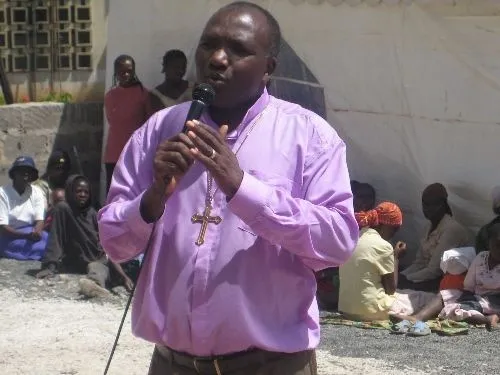
In 1987, while Steve was still pursuing his education, God orchestrated another divine connection. Tim King, having been repeatedly prompted by the Holy Spirit to contact Steve Kabachia, finally located the family in their modest apartment. When they met, Steve shared that he had been hearing God tell him to get in touch with Tim King, but didn't know how to reach him. This was divine appointment at work.
As their friendship deepened, Tim asked why Steve wasn't speaking at churches and receiving support for missions. Steve explained that people wanted to give but asked if he had a non-profit organization registered with the IRS. He didn't. Tim King, along with other men of vision including Bill French and his son Michael French (a recent law school graduate), moved quickly to incorporate Jesus Harvesters Ministries as an Alabama non-profit organization with 501(c)(3) status.
The founding board understood their mandate clearly:
- Raise financial support for Steve and Jennifer's education
- Prepare for their return to Kenya to begin full-time church planting ministry
- Provide ongoing support for the vision God had given them
Tim King accepted the role of Chairman of the Board, a position he would hold for twelve years, seeing the ministry through its critical formative period. The board operated with both a working board of committed men and an advisory board of respected pastors who endorsed the ministry, including Dr. Frank Barker and Raymond Culpepper, whom Steve and Jennifer considered their spiritual mentors.
Return to Kenya and the Birth of Agape Fellowship
Centre
In the early 1990s, armed with theological training, ministry experience, and a clear vision from God, Dr. Steve and Jennifer Kabachia returned to Kenya. They immediately began implementing the strategy God had revealed: they would plant churches that could make disciples, cover the basket, and ensure that the harvest remained.
They established Agape Fellowship Centre in the heart of Nairobi, which would become the mother church of a movement. This wasn't just another church plant—it was the beginning of a church-planting movement that would multiply exponentially. What started as one congregation grew into a network of over 100 branch churches spreading throughout Kenya and across East Africa into Tanzania, Uganda, South Sudan, and Rwanda.
The President of Kenya had donated three acres of prime land in downtown Nairobi for the ministry. The Jesus Harvesters Ministries board in America rallied to support the vision, raising funds to purchase a tent from Miami Tent Company that could seat 1,000 people, buying 1,000 metal chairs from a wholesale company in Tuscaloosa, purchasing a used Toyota SUV, and paying for a shipping container to transport everything to Africa. Steve had drawn a picture of the vision for the main Agape Church building that would be built on this property, as well as a house for his growing family that would include a wing for traveling missionaries.
These were not small undertakings. The financial demands were enormous, putting tremendous pressure on the board back in America. Board members came and went under the strain, but a faithful core—including Tim King, Tom Morrison (the CPA treasurer), and Larry Wren—persevered through countless meetings when construction had to stop due to lack of funds, trusting that God who had called them would provide.
A Voice for African Leadership
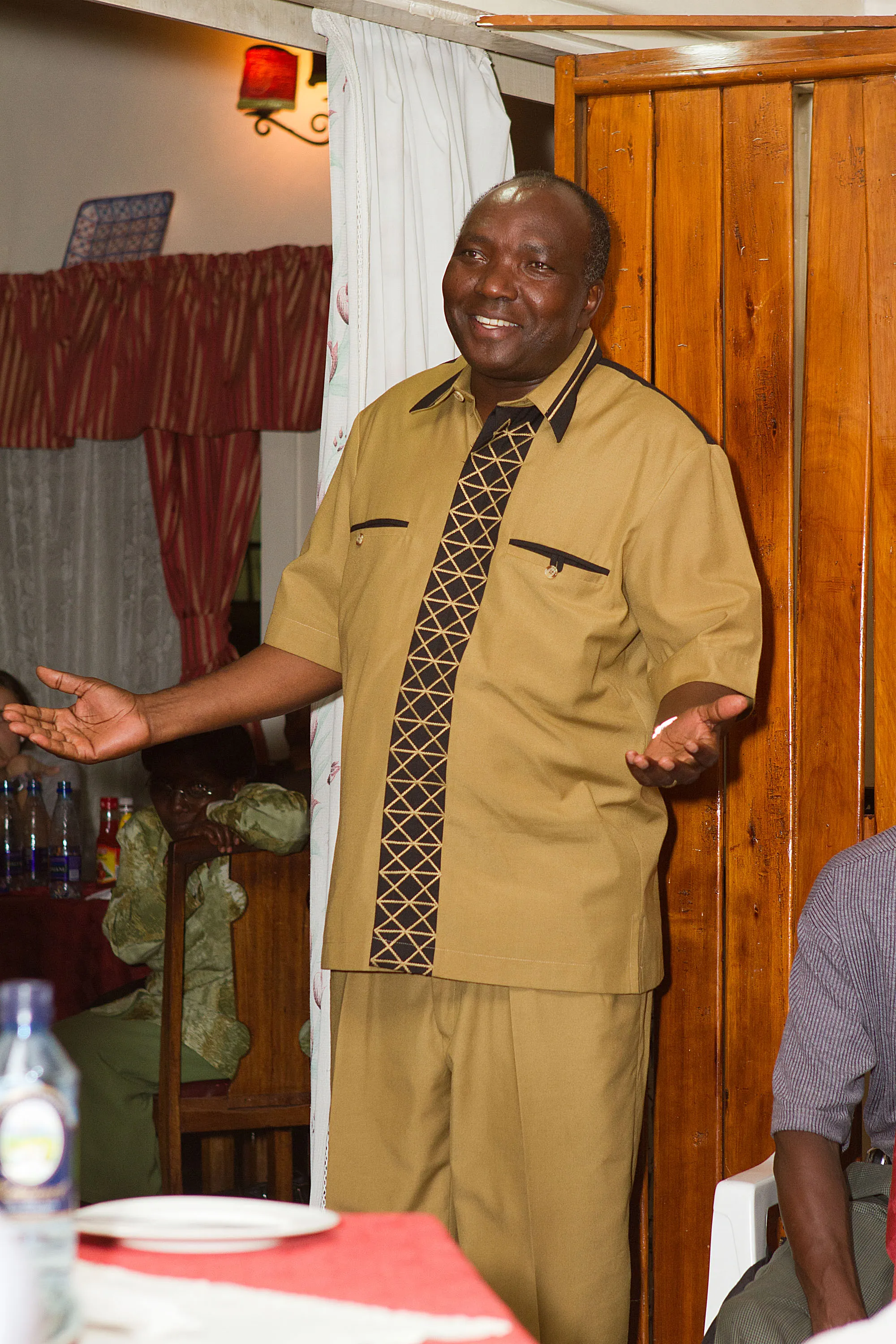
What distinguished Dr. Kabachia from many of his contemporaries was his unshakeable commitment to indigenous African leadership. Despite having trained and ministered extensively in the West, he never lost his connection to his African roots. Rather than becoming Westernized, he became a bridge-builder—someone who could move seamlessly between African and Western church contexts while maintaining his cultural identity and advocating for African-led initiative.
Reuben Ezemadu, the Continental Coordinator for the Movement for African National Initiatives (MANI), described Steve as "the best model of Biblical qualities and characteristics of a networker, peacemaker, reconciler and bridge-builder I have ever met and worked with in my Christian life." This was not empty praise but recognition of a man who dedicated himself to changing the narrative of African missions.
The moment that perhaps best captures Steve Kabachia's prophetic voice and leadership came at the Global Consultation on World Evangelization (GCOWE) in 1997 in Pretoria, South Africa. During this international gathering, information was presented about unreached people groups—including unreached peoples within Kenya itself. The Kenyan delegates, including Steve, realized the painful irony: they had traveled to South Africa to learn about unreached peoples in their own country. It was Steve Kabachia who stood and made the now-famous declaration: "NEVER AGAIN!"
Never again would a Kenyan delegation attend a global meeting only to learn about unreached people groups in their own nation. Never again would Africans be passive recipients of mission strategies designed by others. Never again would the African church wait for outsiders to tell them about the harvest in their own backyard.
This declaration was more than rhetorical flourish—it was a prophetic call to action. Barbara Bills, who witnessed this moment, recalled: "He and other Kenyan leaders returned to their country to form a network which would be instrumental in sending church planting teams to all UPGs in Kenya. Stephen accepted the challenge and worked with other leaders to see that situation changed. That is what MANI is about—national leaders together, working on the unfinished task!"
The "NEVER AGAIN" statement set off the impetus for initiating the Kenya Finish The Task (KFTT) initiative, which became a model for how national leaders could take ownership of reaching their own unreached peoples.
Founder of the Movement for African National Initiatives (MANI)
Steve Kabachia's leadership extended far beyond Kenya. At the African Millennium Consultation in March 2001 in Jerusalem, it was Dr. Kabachia who read and moved the "Jerusalem Declaration," the founding document through which the Movement for African National Initiatives (MANI) came into existence. MANI represented everything Steve believed in: African leaders taking responsibility for African missions, indigenous movements replacing dependency on Western structures, and collaboration across the continent for Kingdom purposes.
As the Regional Coordinator for MANI in the East African Region, Steve facilitated several landmark gatherings:
The Post-AMC consultation (MANI 2006) held in Nairobi in March 2006The first MANI Diaspora Consultation in 2008, also in Nairobi
He served as MANI's representative in fraternal collaboration with Latin American mission leaders, bringing the African story to the Americas and building bridges across continents. He was Co-Chairman of the MANI Continental African Denominational Leaders Network, representing the Pentecostal arm of the African Church and facilitating the Africa Heads of Churches Forum.
A Life of Service and Bridge-Building
Dr. Kabachia's influence extended through numerous leadership positions that demonstrated his commitment to the broader body of Christ:
- Bishop of Agape Fellowship Centre in Kenya
- Senior Pastor of Agape Fellowship Centre, Madaraka Church, Nairobi
- Founder and Board Member of Jesus Harvesters' Ministry, USA
- Regional Coordinator for MANI (Movement of Africa National Initiatives), East Africa
- Associate and Regional Coordinator for DAWN, East Africa
- Board Member of FTT AFRISERVE Kenya
- Board Member of AEE (Africa Evangelistic Enterprise)
- Honorary Treasurer of EAK (Evangelical Alliance of Kenya)
- Board Member of ICM (International Christian Ministries)
- General Secretary of Nairobi Pastors' Fellowship
- Principal of Harvesters' Bible College
- Africa Affiliate of Globeworks Ministry
- Task Member of Transformation Africa
He belonged to and served in numerous evangelical, Pentecostal, and missionary movements including the John Knox Fellowship (which became DAWN Ministries), AD 2000 & Beyond Movement, Global Kingdom Partnership Network, African Round Table, and the Pan African Leadership Team for Lausanne Cape Town 2010.
A Heart for Prayer and Worship
Those who knew Steve intimately speak of a man whose public ministry flowed from private devotion. Dr. Judy Mbugua, a prayer partner for several years, recalled:
"Dr. Kabachia and Dr. Njuguna and their spouses used to come to our home every Friday, and I can just see him kneeling and crying to God for nations and for Kenya. He would then break out in vernacular worship songs."
This image captures something essential about Steve Kabachia: he was not primarily an administrator or strategist, though he excelled at both. He was first and foremost a worshiper and an intercessor. His tears for nations and his spontaneous worship in his native Kikuyu language revealed a heart that was broken for what breaks God's heart and passionate about seeing God's glory fill the earth.
Tim King remembers first meeting Steve and Jennifer at a Full Gospel Business Men's Fellowship meeting in Homewood, Alabama, in 1986. They were leading worship "Kenyan style," and when Tim later prayed for the sick alongside Steve, he noticed something remarkable: "I noticed Steve Kabachia and I flowed in the Spirit very well together." This spiritual sensitivity, this ability to flow in the Spirit, characterized everything Steve did.
Global Impact and Inspiration
Peter Tarantal reflected: "He had such a soft spirit. He will be missed."
The tributes that poured in upon Steve's homegoing reveal the breadth of his influence:
Dean Carlson remembered:
"In addition to the thoughts shared regarding Steve's influence on the continent, I remember vividly the way the Lord used him to inspire our Latino brethren as he represented MANI at the COMIBAM Assembly in Bogota, Colombia and later in Argentina. Steve was a statesman whose life stimulated partnering around the Great Commission."
From Tanzania, Godfred Lema wrote:
"I still remember his zeal, dedication and determination to the ministry of evangelization."
From Rwanda, Enoch B. Dusingizimana, writing in the midst of his own grief over his wife's recent death, expressed:
"Trust Jesus with all of your heart, and then once you have dealt with the process of grieving, please try to see what special thing God wants to do in your life because of your loss. Surely, God has something special for you."
From Burundi, Simeon Havyarimana wrote:
"I really feel very sad. I know he is with the Lord, more happier than when he was on earth, but still we are sorrowful to lose such a great man of God in the great ministry he was doing here with us."
David Niyonzima from Burundi added:
"We in Burundi will remember him for the frequent visits he made to encourage the Body of Christ to be more mission minded and catch the zeal to 'finish the task' and make Christ known throughout the country."
Luis and Doris Bush remembered:
"What a wonderful testimony. We had warm exchange in New York where he participated at the conference we cosponsored with Tim Keller."
These tributes, coming from across continents and denominational lines, reveal a man who inspired people everywhere he went—not through self-promotion but through authentic passion for Christ and genuine love for people.

A Faithful Family Man
Throughout all his ministry accomplishments, Steve remained devoted to his family. He and Jennifer were blessed with eight children, all of whom love the Lord. The house that was built in Nairobi included special consideration for his growing family, while also incorporating a wing for traveling missionaries—a beautiful picture of Steve's heart to build something that would bless both his immediate family and the broader family of God.
Jennifer stood faithfully beside him through every phase of ministry—from the early days of faith-based living in Alabama, through the challenges of building a movement in Kenya, to the constant travel and demands of international leadership. Their partnership was a testament to shared vision and mutual commitment to the call of God.
The Legacy Continues
On December 26, 2013, Bishop Dr. Stephen Munyiri Kabachia finished his earthly assignment. As Reuben Ezemadu eloquently expressed: "We are confident that as a gallant soldier and a General in God's army, he has completed his earthly assignment and has been promoted to a higher call to duty in the presence of our Supreme Commander of the Hosts of Heaven, the King of Kings, Lord of lords."But the work Steve pioneered continues. Jesus Harvesters Ministries remains committed to church planting and discipleship throughout East Africa. The Agape Fellowship Centre network continues to grow, with churches multiplying across Kenya and neighboring nations. The pastors he trained continue to plant churches. The Bible college he founded continues to equip leaders. The vision he championed—of indigenous African leadership taking ownership of the Great Commission mandate—continues to gain momentum.
The "basket" that once lay open and vulnerable is now covered in over one hundred locations across East Africa. The harvest that once was stolen away is now being preserved, discipled, and multiplied through the church-planting movement Steve gave his life to build.
What We Will Miss, What Remains
In the words of his colleague Reuben Ezemadu: "We will miss his infectious disposition towards love, peace, faith and goodwill postures among the brethren. We will miss his power to rally people around worthy causes and inspire vision for reaching the highest goals."
Yet what remains is far greater than what has been lost. The legacy of Bishop Dr. Stephen Munyiri Kabachia is not measured primarily in buildings constructed, budgets raised, or even churches planted—though all these are substantial. His true legacy is the multiplication principle he embodied and instilled in others: that the Gospel is best advanced when every believer becomes a disciple-maker, when every church becomes a church-planting church, and when indigenous leaders take ownership of the mission in their own context.
Steve modeled radical faith that trusted God for daily provision. He demonstrated prophetic courage to challenge the status quo and declare "NEVER AGAIN" to dependency and passivity. He built bridges between cultures and continents while never losing his African identity. He combined evangelistic zeal with strategic thinking, understanding that winning the lost must be coupled with making disciples. He championed indigenous leadership while remaining humble and teachable. He maintained spiritual vitality through worship and prayer while managing complex organizations and initiatives.
Those of us who remain are called to carry forward the vision that Steve lived and died for. We are called to ensure that the basket remains covered, that churches continue to be planted, that leaders continue to be trained, that unreached peoples continue to be reached.
The ministry Steve founded operates on a principle he often articulated: minimal administrative overhead, volunteer leadership, and maximum deployment of resources to the field. This lean, mission-focused approach ensures that the work continues efficiently and effectively, just as Steve intended.
Well Done, Good and Faithful Servant
Bishop Dr. Stephen Munyiri Kabachia lived a life worthy of imitation. From a high school student in Kenya to a globally influential mission leader, from a young evangelist frustrated by lost fruit to a church-planting movement founder, from a man living by daily faith in a Birmingham apartment to a bishop overseeing over one hundred churches—his journey was marked by consistent obedience to God's voice.
He took seriously the Great Commission mandate to make disciples of all nations. He understood that the Gospel is both message and power, both proclamation and demonstration. He refused to accept the status quo when it left people unreached and harvest unharvested. He built with vision and prayed with tears. He led with courage and served with humility.
As we honor his memory, we do so not merely by looking backward to celebrate what was, but by looking forward to complete what he began. The work of Jesus Harvesters Ministries continues. The partnership with Agape Fellowship Centre endures. The vision for reaching East Africa remains clear and compelling.
Steve would not want us to mourn without hope or remember without action. He would call us, as he called so many others throughout his ministry, to "finish the task." He would remind us that there are still baskets to be covered, still churches to be planted, still peoples to be reached, still disciples to be made. We rejoice in his life and legacy. We praise God for his example to follow. May the multiplication continue. May the harvest be preserved. May the Great Commission be fulfilled.